Best Slow Feeder Bowl for Fast-Eating Dogs: Mazes, Materials and Fit
Affiliate disclosure: This article contains affiliate links. If you buy through them, we may earn a small commission at no extra cost to you. As an Amazon Associate I earn from qualifying purchases. Links go to Amazon search results for the product types we mention, not to specific products we have tested.
Not veterinary advice. This article shares general information about dog gear only. It is not a substitute for advice from your veterinarian. Check fit and supervise your dog with new gear, toys and chews, and ask your vet about health, diet, injuries or behaviour concerns.
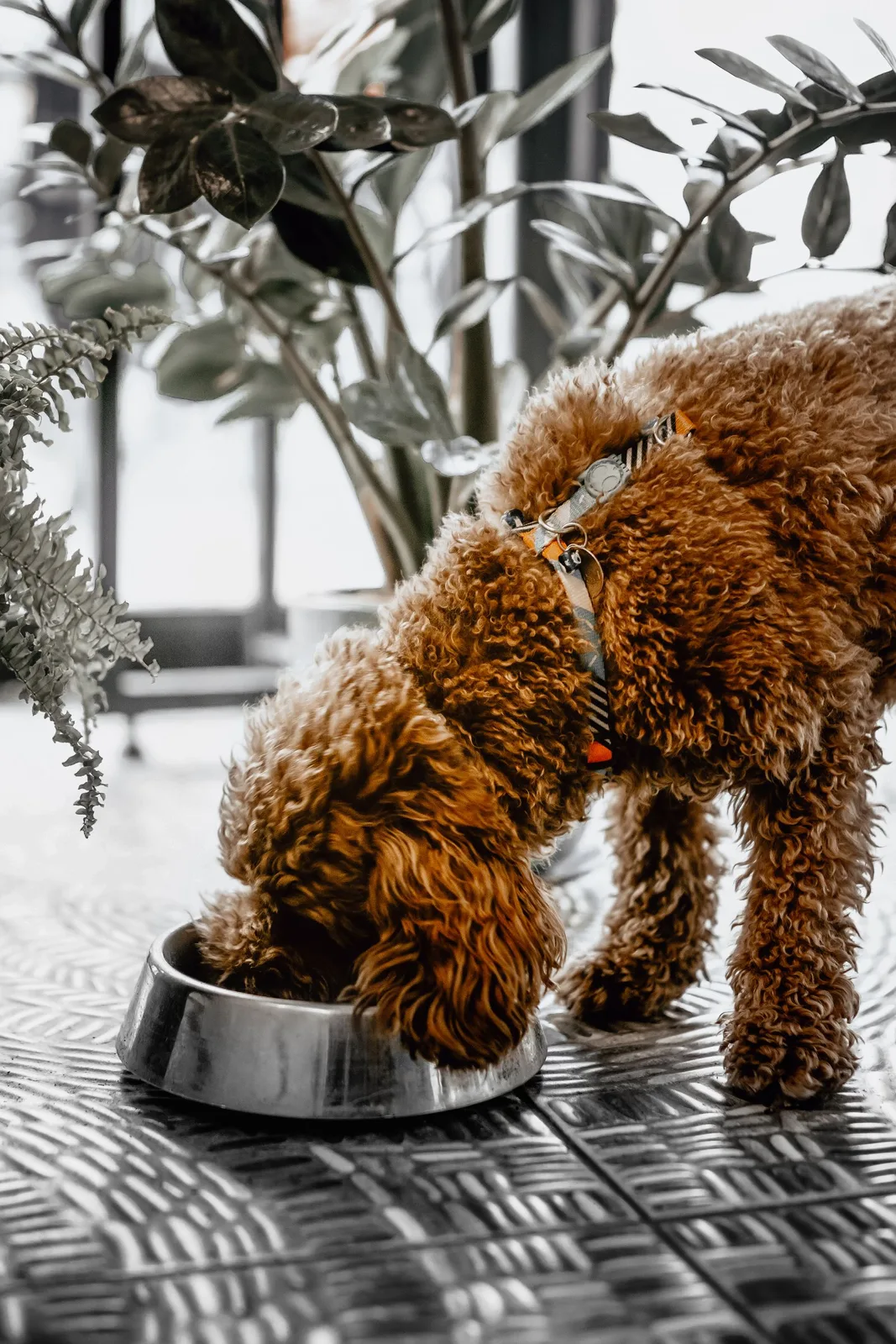
Some dogs savor their dinner. Others inhale it in the time it takes you to put the bag away, then look up as if nothing happened. Fast eating can lead to gulping air, coughing up food, and a dog who seems hungry again a minute later.
A slow feeder bowl is the simplest fix. Ridges, posts or a maze inside the bowl make your dog work around obstacles to reach each bite. The best slow feeder bowl for fast-eating dogs matches your dog's size, face shape and determination, holds a full meal, and is easy to keep clean. This guide covers how slow feeders work, what to look for, real bowls with the details their maker publishes, other ways to slow mealtimes down, and the bloat warning signs that every owner of a fast eater should know.
Why fast eating matters
The American Kennel Club's guide to bloat (GDV), written by veterinarian Dr. Jeff Grognet, describes bloat as a medical and surgical emergency in which the stomach fills with air and can twist. Among the risk factors it lists:
- Rate of eating. Fast eaters have five times the risk of slow eaters, according to the article.
- Meal frequency. Dogs fed one meal a day are twice as likely to bloat as those fed two meals a day.
- Body shape. Dogs with a deep, narrow chest are affected most often, including large and giant breeds such as Great Danes, St. Bernards, Weimaraners, Irish and Gordon Setters, Standard Poodles and Doberman Pinschers.
- Stress at mealtimes. Stressed or anxious dogs are more likely to bloat, and the article notes that feeding around other dogs can be a factor.
The same article says slow feeder bowls with fingers or center posts slow dogs down physically, while pointing out that anxiety around food also needs addressing. A slow feeder is one helpful tool, not a guarantee. It can't remove every risk, and it doesn't replace your vet's advice for a high-risk breed.
How slow feeder bowls work
Slow feeders break up the open surface of a bowl so your dog can't take huge mouthfuls. Common designs:
- Ridges and mazes: curved walls that your dog has to work food out of.
- Center posts or fingers: raised columns that force smaller bites.
- Removable inserts: a maze that sits inside a standard bowl, so you can take it out to wash.
- Shallow, wide designs: mazes with lower walls for small dogs and flat-faced breeds.
What to look for in a slow feeder bowl
The right difficulty
A maze that's too hard frustrates some dogs into giving up or flipping the bowl; one that's too easy doesn't slow them down. Start with a moderate design and step up if your dog still finishes in seconds.
Your dog's face shape
Flat-faced (brachycephalic) dogs such as Pugs and French Bulldogs may find deep, narrow channels awkward to reach into. Outward Hound, for example, makes a separate slow bowl design for flat-faced breeds. Long-nosed dogs can usually manage deeper channels.
Capacity
Check that the bowl holds a full meal with room for the maze. If you feed wet food or add water, a bowl that is too small spills.
Material
- Plastic: light, colorful and usually inexpensive, with lots of maze designs. Check that it is labelled free of the chemicals you want to avoid, and replace it if it becomes deeply scratched or chewed.
- Stainless steel: durable and easy to sanitize. Most stainless slow feeders use an insert or simple ridges.
- Ceramic: heavy and stable but can chip.
A non-slip base
Fast eaters often push bowls around the floor. A rubberized or non-slip base keeps the bowl in place.
Easy cleaning
Narrow channels trap food. Check whether the bowl is dishwasher safe and whether you can reach into every groove with a brush.
Slow feeder bowls to know
Suits most fast eaters, with three difficulty levels: Outward Hound Fun Feeder Slo Bowl
Outward Hound says its Fun Feeder Slo Bowl uses ridges, deep grooves and mazes to keep dogs engaged for up to 10x longer at mealtime. The brand offers the bowl in multiple colors and sizes and in three difficulty levels, Slow, Slower and Slowest, including a design for flat-faced breeds. It lists a non-slip base, top-rack dishwasher-safe care and BPA-, PVC-, lead- and phthalate-free materials, with small, medium and large sizes that it says hold 3/4 cup, 2 cups and 3 to 4 cups.
The range of levels and sizes makes it easy to find a starting point and step up if your dog gets the hang of it.
Browse Outward Hound Fun Feeder slow bowls
Suits owners who prefer stainless steel: Outward Hound Fun Feeder Stainless Steel Slow Feeder
The Fun Feeder Stainless Steel Slow Feeder Dog Bowl pairs a stainless steel bowl with a removable slow feeder insert. Outward Hound describes the insert as its most challenging, Slowest-level maze for very fast eaters, says the bowl holds 2 cups of dry or wet food, and lists a non-slip base and top-rack dishwasher care on a low heat setting.
Because the insert comes out, you can wash it separately or use the bowl normally on days your dog needs a simpler setup.
Browse stainless steel slow feeder bowls
Suits large and giant breeds: large-capacity slow feeders
Big dogs need a bowl that holds a whole meal without overflowing and is heavy or grippy enough that it doesn't slide. Check the listed capacity against your dog's meal size.
Browse large slow feeder bowls
Other ways to slow mealtimes down
- Split meals. Feeding two meals instead of one is among the factors the AKC article links to lower bloat risk.
- Feed dogs apart. The AKC article says separating dogs at feeding times may help reduce anxiety and stress around food.
- Use puzzle feeders and lick mats for part of a meal. See our puzzle toys for dogs and lick mat ideas and safe toppings.
- Scatter feeding. For dry food, scattering kibble on a clean mat or in the garden turns a meal into a sniffing game. Our indoor dog enrichment ideas have more ways to make food work for your dog's brain.
- Keep mealtimes calm, with no rushing, competition or excitement right before or after.
Thinking about raising the bowl as well? Our guide to elevated dog bowls: pros and cons covers that question. Note that the AKC bloat article says research on raised versus floor bowls has been conflicting, so it makes no firm recommendation.
Introducing a slow feeder
- Start easy. Put a few high-value treats in the maze so your dog learns it's worth the effort.
- Use the usual meal next, in the same place and at the same time.
- Watch the first few meals. Some dogs bark, paw or try to carry the bowl away. Make it easier if your dog gets frustrated.
- Check the time. If your dog still finishes in seconds, try a harder level; if they give up and walk away, go easier.
Bloat: signs to know
The AKC lists these signs of bloat:
- An enlarged abdomen
- Retching
- Salivation
- Restlessness
- Pain, such as whining if you press on the belly
The article warns that without treatment, a dog can go into shock within an hour or two, and that you should take your dog to a veterinarian or emergency clinic immediately if you see signs of bloat. Don't wait to see if it passes.
Cleaning a slow feeder
- Wash after every meal, especially with wet food. Food left in grooves goes off quickly.
- Use a bottle brush or an old toothbrush for narrow channels.
- Follow the maker's dishwasher guidance.
- Replace bowls that are cracked, deeply scratched or chewed.
Frequently asked questions
Do slow feeder bowls prevent bloat?
They help slow fast eaters down, and the AKC lists eating speed as a bloat risk factor, but no bowl can prevent bloat on its own. Ask your vet about your dog's risk, especially for deep-chested breeds.
Are slow feeders good for puppies?
Many puppies use them happily. Choose an easy maze and a size that holds their meal, and supervise while they learn.
What slow feeder suits flat-faced dogs?
Look for a shallow maze designed for flat-faced breeds, so your dog doesn't have to press their face into deep channels. Outward Hound offers one in its Fun Feeder range.
Can I use a slow feeder with wet food?
Yes, many slow feeders work with wet or dry food. Wash it thoroughly after each meal.
My dog gets frustrated with a slow feeder. What should I do?
Switch to an easier level, add a few treats to make it rewarding, and build up gradually. A puzzle that's too hard can put a dog off eating.
About the author: This article was researched and written by the Dog Gear Hub Editorial Team. We compare dog gear and gifts using manufacturer and retailer information and owner reviews, and we say clearly when we haven't tried a product ourselves.
Read next: Elevated Dog Bowls: Pros, Cons, and the Bloat Question →