Thanksgiving Foods Dogs Can Usually Eat and Ones to Skip
Not veterinary advice. This article shares general information about dog gear only. It is not a substitute for advice from your veterinarian. Check fit and supervise your dog with new gear, toys and chews, and ask your vet about health, diet, injuries or behaviour concerns.
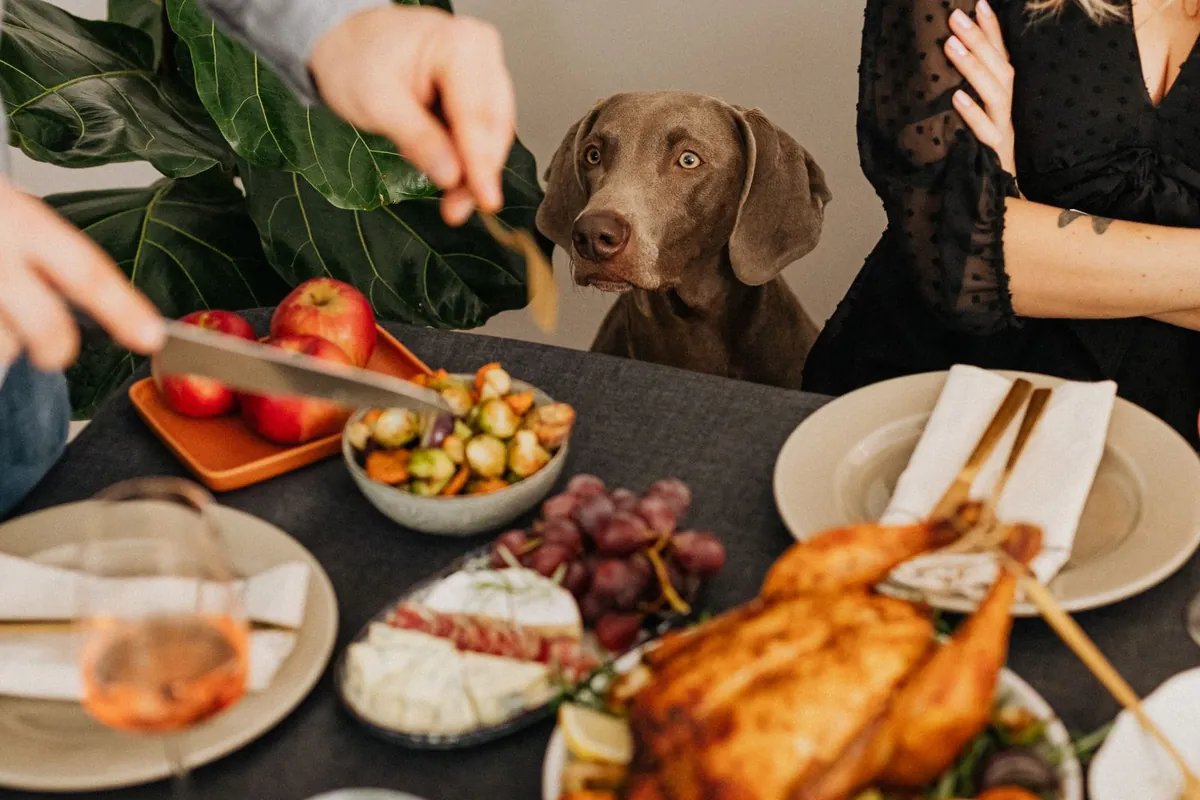
Thanksgiving is a hard day to be a dog. The kitchen smells incredible for hours, guests drop food, and someone always wants to "just give him a little bit." Some Thanksgiving foods are fine for most dogs in small, plain portions. Others can cause a stomach upset, pancreatitis or poisoning.
This guide sorts the usual Thanksgiving foods dogs can eat from the ones to keep off their plate, based on guidance from the American Kennel Club (AKC), the ASPCA, the American Veterinary Medical Association (AVMA) and the FDA. It's general information, not veterinary advice. Ask your vet before sharing any people food, especially if your dog has a health condition, food allergies, a sensitive stomach or is on a special diet.
The short answer
Plain is the key word. Many Thanksgiving ingredients are fine for dogs *before* the butter, salt, sugar, onions and spices go in. The AKC says Thanksgiving staples can be safe for dogs when prepared plainly and served in small portions, and recommends avoiding added butter, salt, sugar, seasonings and other rich ingredients.
The simplest approach: set aside a small plain portion for your dog *while you cook*, before anything is seasoned.
Thanksgiving foods dogs can usually eat (plain, in small amounts)
Turkey meat (no skin, no bones, no seasoning)
The AKC says turkey meat is okay to offer as long as it hasn't been prepared with seasoning, and advises against turkey skin and bones. Plain white breast meat with the skin removed is the simplest choice. Pick it off by hand so you can check for small bones, and take it from a part of the bird that hasn't touched stuffing, onions or a butter rub. Our guide can dogs eat turkey? covers portions, bones and how to cook plain turkey for your dog in more detail.
Sweet potatoes
Plain, cooked sweet potato is fine for most dogs. The AKC notes that plain mashed sweet potato is generally safe but that versions topped with brown sugar, marshmallows or maple syrup should be avoided.
Regular potatoes
The AKC says plain boiled or baked potatoes can be shared, but not mashed potatoes made with butter, cream, onions, garlic or rich seasonings.
Green beans
Plain green beans are one of the easiest dog-safe sides. Set some aside before they're buttered, salted or turned into a casserole (AKC).
Peas
Plain peas are fine in moderation, according to the AKC, but creamed peas are on its list of foods to avoid.
Pumpkin (plain puree, not pie filling)
Pure canned pumpkin or plain cooked pumpkin is fine for most dogs. The AKC stresses using pure pumpkin puree, not pre-spiced or sweetened pie mix, and says pumpkin pie should stay a people-only dessert. Check the can: "pumpkin puree" and "pumpkin pie filling" sit side by side on the shelf.
Apples (no core or seeds)
Fresh apple slices are fine, but the AKC advises cutting around the core because apple seeds can be toxic in large amounts. Apple pie is not a dog treat.
Thanksgiving foods to keep off your dog's plate
These are the foods to keep firmly on the human side of the table.
| Food | Why it's a problem |
|---|---|
| Turkey bones | Cooked bones can splinter and cause choking or internal injuries |
| Turkey skin, fat trimmings, gravy | High fat; linked to stomach upset and pancreatitis |
| Stuffing and dressing | Usually contains onions, garlic, herbs, butter and sometimes raisins |
| Onions, garlic, scallions, chives | Allium family; can damage red blood cells |
| Grapes and raisins | Can cause kidney damage in dogs |
| Chocolate and cocoa | Contain methylxanthines; darker chocolate is more dangerous |
| Sugar-free treats, gum and some peanut butters | May contain xylitol, which can cause low blood sugar and liver damage |
| Raw yeast dough | Can expand in the stomach and produce alcohol |
| Alcohol | Can cause vomiting, incoordination, breathing problems and worse |
| Macadamia nuts and other nuts | Macadamias are toxic to dogs; other nuts are high in fat |
| Casseroles, creamed vegetables, pies and cookies | Rich, sugary or seasoned; may contain toxic ingredients |
| Ham | Fatty and salty |
Sources: AKC, ASPCA, AVMA, FDA.
A few of these deserve more explanation.
Fatty scraps and pancreatitis. The FDA warns against giving pets high-fat scraps such as fat trimmings or the skin from a roasted turkey, saying rich food can cause an upset stomach and a painful, potentially life-threatening condition called pancreatitis. It lists vomiting, stomach pain, restlessness, shaking, diarrhea, fever and weakness as the most common signs in dogs.
Xylitol. The FDA notes that xylitol, sometimes listed as birch sugar or wood sugar, can be found in candy, gum, some peanut butters and baked goods, and that vomiting is generally the first symptom, followed by signs of low blood sugar. Read labels on sugar-free desserts, and on any peanut butter you use for a dog treat.
Raw dough. If you're making rolls, keep rising dough out of reach. The ASPCA explains that yeast dough can rise in the stomach, causing painful bloating, and produce alcohol as it ferments.
How to make a dog-friendly Thanksgiving plate
If you want your dog to join in, a small plate of plain foods is the safest way. Check with your vet first if your dog has any health issues or a sensitive stomach.
What you need (all plain, no salt, butter or seasoning):
- A few small pieces of cooked white turkey meat, skin and bones removed
- A spoonful of plain cooked sweet potato or plain pumpkin puree
- A few plain cooked green beans, cut into bite-size pieces
How to make it:
- Set the portions aside while cooking, before seasoning, butter or onions go in. Cook the vegetables plainly by steaming or boiling.
- Let everything cool to room temperature.
- Cut into bite-size pieces suited to your dog's size.
- Serve a small amount in your dog's own bowl, away from the table, rather than hand-feeding from your plate.
How much? Treat it as a treat, not a meal. VCA Animal Hospitals says the general rule is that treats and snacks should make up no more than 10% of a dog's daily calories, with the other 90% coming from their complete and balanced food. Small dogs need very little. If you're unsure of your dog's daily calorie needs, ask your vet. VCA also suggests introducing new foods slowly and one at a time if your dog is prone to tummy upset.
If you'd rather not share people food at all, the AKC suggests Thanksgiving-themed canned dog food as an alternative. You can also spread a little plain pumpkin on a lick mat (see our lick mat ideas and safe toppings) or freeze dog-safe foods into a toy using our frozen dog treat toys guide. Both keep your dog busy while you eat.
Keeping your dog safe on Thanksgiving day
Much of the risk isn't from what you feed your dog, but from what they help themselves to.
- Tell guests the rules. The AKC recommends making sure family members and guests know which foods are off-limits. A quick "please don't feed the dog" at the start saves a lot of trouble.
- Give your dog a quiet space. The AVMA recommends that pets have a quiet place to retreat away from the commotion, such as a room or crate. If your dog uses a crate, our guide on how to choose a dog crate size can help you check it still fits.
- Watch the door. The AVMA warns that pets can slip out while guests come and go, and recommends up-to-date ID tags and a registered microchip.
- Secure the trash. The AVMA advises disposing of carcasses, bones, strings and packaging in a tightly secured bag in a closed trash container outdoors or behind a locked door. The FDA also warns that snack bags can suffocate a dog that pushes its head inside.
- Clear plates promptly and keep food off low coffee tables.
- Plan a distraction. A long chew or puzzle toy during dinner can stop begging. Our indoor dog enrichment ideas have plenty of options.
What to do if your dog eats something it shouldn't
The AVMA lists sudden behavior changes, depression, pain, loss of appetite, vomiting and diarrhea as signs a pet may have eaten something harmful, and says to call your veterinarian or nearest emergency clinic immediately.
- Call your vet, an emergency vet or ASPCA Animal Poison Control right away. Don't wait for symptoms if you know your dog ate something harmful, such as chocolate, xylitol, grapes or onions, and don't try home remedies or make your dog vomit unless a vet tells you to.
- Have these numbers handy: ASPCA Animal Poison Control, (888) 426-4435 (open 24/7), and Pet Poison Helpline, 855-764-7661. The AVMA notes that a fee may apply.
- Note what and how much your dog ate, and when, plus the packaging if there is one.
- Find your nearest 24/7 emergency vet before the holiday, since your regular clinic may keep different hours. The AVMA recommends planning the route in advance.
Frequently asked questions
Can dogs eat Thanksgiving turkey?
Plain turkey meat with no skin, bones or seasoning is usually fine in small amounts. Avoid skin, fat, gravy and bones. Ask your vet first if your dog has health conditions.
Can dogs eat mashed potatoes?
Plain boiled or baked potato is generally fine, but most mashed potatoes contain butter, cream, garlic or onion, which dogs shouldn't have.
Can dogs have stuffing?
No. Stuffing usually contains onions, garlic, herbs and butter, and sometimes raisins, all of which can be harmful to dogs.
Can dogs eat pumpkin pie?
No. Pumpkin pie contains sugar and spices. Plain pumpkin puree, not pie filling, is the dog-friendly option.
Can dogs eat cranberry sauce?
Most cranberry sauce is heavily sweetened, and recipes vary in what else goes in. It's simplest to skip it and offer a plain dog-safe food instead.
What should I do if my dog ate a turkey bone?
Call your vet or an emergency vet straight away, even if your dog seems fine, and don't try home remedies. The FDA notes that symptoms of a lodged bone may not appear for hours or days.
About the author: This article was researched and written by the Dog Gear Hub Editorial Team. We base food and safety guidance on published advice from the AKC, ASPCA, FDA, AVMA and VCA, linked above. It is general information, not a substitute for your own vet's advice.
Read next: Lick Mat Ideas for Dogs: Safe Toppings, Recipes and Tips →