Dog Raincoat With Harness Hole: Fit and Buying Guide
Affiliate disclosure: This article contains affiliate links. If you buy through them, we may earn a small commission at no extra cost to you. As an Amazon Associate I earn from qualifying purchases. Links go to Amazon search results for the product types we mention, not to specific products we have tested.
Not veterinary advice. This article shares general information about dog gear only. It is not a substitute for advice from your veterinarian. Check fit and supervise your dog with new gear, toys and chews, and ask your vet about health, diet, injuries or behaviour concerns.
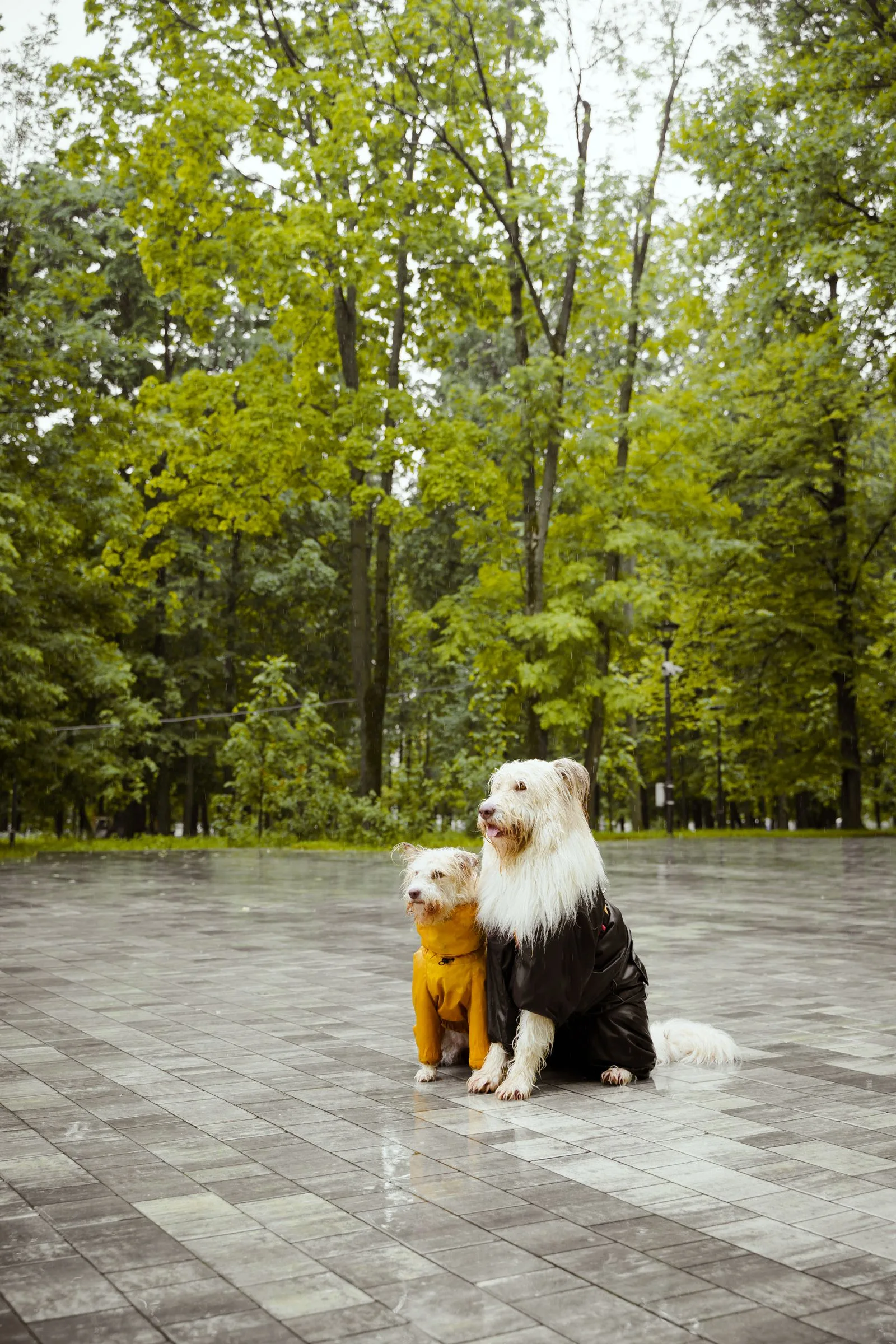
A dog raincoat with a harness hole solves a specific problem: you want weather coverage without fishing around under the fabric every time you attach the leash. Unfortunately, a hole on the back is not automatically in the right place for your harness.
Start with the gear you already use. Find the leash ring, look at where it sits when your dog stands and walks, and choose the coat around that location. Fit the raincoat over the harness during the indoor try-on, not over a bare dog followed by a hopeful guess.
This guide focuses on lightweight rain shells rather than insulated winter coats. It covers opening placement, practical sizing, coverage tradeoffs, and two named raincoats with manufacturer-described harness access.
First identify the attachment you actually use
A back-clip harness
A back-clip harness places the leash attachment on top of the dog's body. Some rings sit relatively close to the neck, while others sit farther down the back. A raincoat's portal must reach that particular ring without pulling the entire coat forward or backward.
Look for a photograph of the opening itself, not just a side photograph of a dog in the coat. If the listing does not show the portal, ask the seller for its location and usable dimensions before ordering.
A front-clip harness
A top opening does not provide direct access to a chest attachment. A listing saying “harness compatible” may describe only back-clip use. Check for explicit front-clip access or ask the manufacturer how the coat is intended to work with your harness.
Do not assume you can route the leash through the neckline without affecting fit. If you cannot use your usual attachment as intended, the coat may simply be the wrong design. Our dog harness guide explains how harness shapes and attachment positions differ.
A collar opening
A small hole near the collar may be designed for a collar ring rather than a harness ring. The terms “leash hole,” “harness opening,” and “leash portal” are not interchangeable measurements.
Likewise, a decorative ring sewn onto the raincoat is not automatically a walking attachment. Use only attachments the manufacturer identifies for that purpose. Buy the coat for coverage, not as an assumed replacement for the walking gear you selected separately.
Measure the dog, then account for the harness
The AKC's apparel-measuring guide recommends taking back length, chest girth, and neck girth while the dog stands naturally. It also emphasizes that sizes vary between brands and styles.
Record the dog's measurements first, following the exact model's directions. Then note what will sit underneath: a narrow strap harness, a padded vest, or a harness with a substantial handle. Do not add a random number of inches and assume that is the correct coat size. Ask the manufacturer how its chart accounts for layering.
Useful measurements and checks include:
- Back length: the coverage distance specified by that brand.
- Chest girth: the widest part of the rib cage, following the chart's method.
- Neck opening: enough adjustment for the intended dressing method.
- Portal location: where the opening sits relative to the actual leash ring.
- Belly panel: its length and position when the dog stands normally.
A large enough coat can still be the wrong shape. A long-backed dog may need more length without a much wider chest panel, while a broad-chested dog may need more torso room without extra fabric hanging at the tail.
Two raincoats to investigate
These are product directions based on published construction details, not claims of hands-on use. Check the current version and size before buying because features can differ within a product family.
Ruffwear Sun Shower
Suits: owners looking for an uninsulated rain shell with back access and relatively simple side buckles.
The Sun Shower product page describes a waterproof, windproof shell, a leash portal on the back, an oversized storm collar, side-release buckles, and an extended vest covering the hips and thighs. Ruffwear says the portal is intended for wearing the coat over most harnesses, which is not a promise of universal compatibility.
The key check is whether your harness ring lines up with the opening. A bulky handle or a ring located unusually far back warrants extra attention. Browse Ruffwear Sun Shower raincoats, then confirm the actual size chart and portal layout rather than choosing from the color photograph.
Ruffwear lists leg loops as an optional fit feature for windy conditions. During your try-on, follow the instructions for those loops rather than assuming they are required for every dog.
Hurtta Monsoon Coat II
Suits: owners seeking a raincoat with multiple adjustment points and a broad belly flap, provided the selected size has the required opening.
Hurtta's Monsoon Coat II page describes taped seams, neck and back-length adjustments, a belly flap, and snap-fastened harness access. A crucial size-specific detail: the manufacturer lists a harness opening on sizes 28–80, while sizes 23–25 have a leash loop instead.
That difference matters if you are shopping for a small dog. Do not assume a product feature shown on a larger size appears on the smallest version. Browse Hurtta Monsoon Coat II raincoats and read the exact size's features before selecting it.
Hurtta uses back length as its primary jacket sizing reference. That is different from making every coat choice by chest girth alone. Check all the supplied measurements and adjustment ranges.
What useful coverage looks like
More fabric is not always more convenient. Think about what gets wet during your ordinary walk and which parts of the dog the coat actually covers.
| Feature | Practical benefit | What to check |
|---|---|---|
| Longer back panel | Covers more of the torso | Does it stay correctly positioned when the dog turns? |
| Belly flap | Catches some road splash | Does its cut leave appropriate bathroom clearance? |
| Raised collar | Adds neck coverage | Can the dog move its head normally during the try-on? |
| Flap over portal | Covers an unused opening | Can you still find and attach the actual harness ring? |
| Hood | Adds fabric around the head | Does your dog accept it, and does it stay out of the way? |
| Leg loops | Help position some designs | Can you fit them according to the manufacturer's directions? |
The AKC measuring guide notes that underside length and bathroom clearance deserve attention. Evaluate that with your dog standing, not only lying down in the living room.
Waterproof and water-resistant are different descriptions
Read the product's actual weather description and construction notes. A seller may describe one garment as water-resistant and another as waterproof. Look for information about the shell, seams, and closures rather than inferring performance from a shiny surface.
Openings complicate coverage. Even a waterproof fabric does not make every gap at the neck, portal, and belly sealed. A raincoat is also not a full-body suit: paws, face, and uncovered areas will still get wet.
If a coat has insulation, treat that as a separate choice rather than an automatic upgrade. Our winter dog coat buying guide covers the differences between cold-weather garments and lightweight shells. Choose for your actual outing instead of buying the heaviest item available.
The indoor try-on sequence
Keep the packaging until you know the coat fits, and follow the retailer's try-on conditions.
- Put on and adjust the existing harness as usual.
- Add the raincoat using its intended closures.
- Find the harness ring through the portal without twisting the harness.
- Attach the leash to that ring, not to the surrounding fabric.
- Watch the dog walk, turn, sit, and lower its head normally.
- Check that the coat and harness remain in position after movement.
- Confirm that you can remove the coat without an awkward struggle.
The AKC's fit guidance emphasizes avoiding restrictive, irritating fits. If the garment bunches around the front legs or changes the harness's position, reassess the size or shape rather than keeping it because the color looks good.
Do not cut a new opening into a waterproof shell as your first solution. You may alter its weather coverage and return eligibility, and the new hole may still be in the wrong position when the dog moves.
Cleaning, drying, and storage
Choose a garment you can maintain. Ruffwear's Sun Shower care instructions call for cold gentle washing, mild detergent, and hanging to dry. Hurtta's Monsoon instructions specify their own washing procedure and say not to use fabric softener. Do not assume one coat's care label applies to another.
After a wet walk, inspect the harness as well as the shell. Hang the pieces separately according to their instructions and check portal edges and closures for trapped debris. A spare towel by the door can be more useful than adding another complicated coat feature.
For colder-weather shopping within this same gear category, our winter coats with harness holes guide addresses insulated alternatives. If your route also involves winter footing and road treatment, see dog boots for snow and salt as a separate equipment decision.
FAQ
Will any harness fit under a raincoat?
No. A coat may have enough chest room but place the opening in the wrong location. Check both the bulk underneath and the ring's position.
Should the harness go over or under the coat?
For the portal-equipped designs discussed here, the intended arrangement is the harness under the coat. Follow the instructions for your exact coat and harness instead of assuming either arrangement always works.
Is a leash loop the same as a harness hole?
No. A loop is an attachment feature; an opening provides access to gear underneath. Check the manufacturer's description and permitted use for the particular size.
Does a rain shell replace a winter coat?
Not automatically. Rain coverage and insulation are separate features. Start with the conditions and the dog's existing gear, then choose a garment whose design and fit meet that need.
About the author: This article was researched and written by the Dog Gear Hub Editorial Team. We compare dog gear and gifts using manufacturer and retailer information and owner reviews, and we say clearly when we haven't tried a product ourselves.
Read next: How to Choose a Dog Harness: Fit, Styles and Sizing Explained →