Harnesses for Corgis: How to Fit Short Legs, Deep Chests and Fluffy Coats
Affiliate disclosure: This article contains affiliate links. If you buy through them, we may earn a small commission at no extra cost to you. As an Amazon Associate I earn from qualifying purchases. Links go to Amazon search results for the product types we mention, not to specific products we have tested.
Not veterinary advice. This article shares general information about dog gear only. It is not a substitute for advice from your veterinarian. Check fit and supervise your dog with new gear, toys and chews, and ask your vet about health, diet, injuries or behaviour concerns.
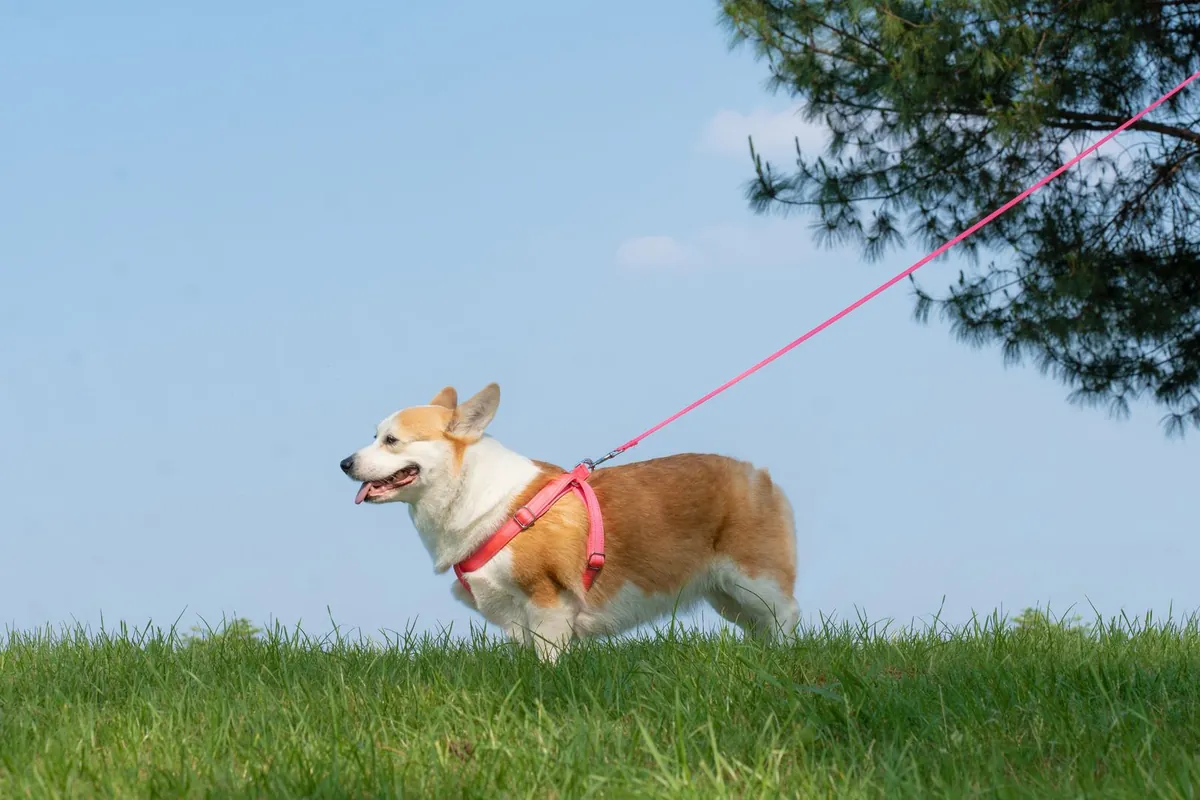
Corgis are built differently from most dogs their weight, and that's why so many harnesses don't fit them well. A harness sized for a 25-pound dog may sit too far back on a corgi's long body, rub behind short front legs, or slide around in a thick double coat. Finding the best harness for a corgi is mostly about matching the harness shape to the corgi shape.
This guide explains what makes corgis tricky to fit, which harness styles tend to work, how to measure and adjust, and four example harnesses from brands that publish clear sizing. We haven't fit-tested these harnesses on our own dogs. Product details come from each brand's own product page, so check the current listing before you buy.
Why corgis are hard to fit
The American Kennel Club breed standard describes the Pembroke Welsh Corgi as "moderately long and low," with a deep chest "well let down between the forelegs." The standard gives a height of 10 to 12 inches at the shoulder, with weight not exceeding 30 pounds for males and 28 pounds for females.
In practice, that means:
- A deep, wide chest compared with a narrow waist, so girth (chest) straps need plenty of adjustment.
- Short front legs, leaving little room between the leg and the girth strap. Straps placed too close to the "armpit" area rub.
- A long back, so harnesses designed for a square-bodied dog can sit oddly.
- A thick double coat, which can hide a loose fit in winter and a tight one after a summer shed.
Cardigan Welsh Corgis have their own breed standard but the same long, low build, so the same fit rules apply.
Harness styles that suit corgis
Y-front (Y-shaped) harnesses
A Y-front harness has a strap that runs down the center of the chest between the front legs, forming a "Y" shape around the neck. Many owners of long, low breeds prefer this style because it sits on the breastbone rather than across the front of the shoulders. Look for one with an adjustable neck and an adjustable girth so you can fit both the broad chest and the narrower waist.
Front-clip and dual-clip harnesses
If your corgi pulls, a harness with a leash ring at the chest can help you steer, because pulling turns the dog sideways toward you rather than straight ahead. A dual-clip harness gives you both a chest ring and a back ring, so you can use the front for training walks and the back for relaxed ones. Our guide to front-clip vs back-clip dog harnesses explains the difference in more detail.
Step-in and neck-buckle harnesses
Some corgis dislike having a harness pulled over their head. Harnesses with a buckle at the neck or a step-in design avoid that. They're also handy if you're fitting a harness over a thick winter coat.
Harnesses with a handle
Corgis are low to the ground, so they can struggle with high car seats, stiles and rocks on a hike. A sturdy handle on the back lets you give a quick boost. It isn't a substitute for a lift harness for a dog with mobility problems; if your dog has back or joint issues, ask your vet which kind of support is right.
Four example harnesses to compare
| Harness | Style | What the brand lists |
|---|---|---|
| Ruffwear Front Range | Padded, dual-clip | Back V-ring and front chest clip, four adjustment points, ID pocket, reflective trim |
| Ruffwear Web Master | Body harness with handle | Neck buckle so it doesn't go over the head, reinforced handle |
| Ruffwear Flagline | Lightweight harness with handle | Lightweight, handle for lifting, front leash attachment |
| PetSafe Easy Walk | Front-clip, chest strap | Martingale loop at the chest, quick-snap shoulder and belly straps |
We don't list prices because they change often.
Ruffwear Front Range Harness
Ruffwear describes the Front Range as a padded everyday harness with two leash points: an aluminum V-ring on the back and a reinforced clip at the chest for dogs that pull. It has four points of adjustment, an ID pocket for tags and reflective trim. Ruffwear sizes it by girth, measured around the widest part of the rib cage, and advises choosing the larger size if your dog is between sizes.
- Suits: everyday walks, and corgis that pull some of the time.
- Check: with a corgi's deep chest, the girth measurement decides the size; make sure the chest panel doesn't sit right behind the front legs.
- Shop: Ruffwear Front Range harness on Amazon
Ruffwear Web Master Harness
Ruffwear lists the Web Master as a harness with a neck buckle, so you don't have to pull it over the head of a head-shy dog, plus a reinforced handle for helping your dog over obstacles.
- Suits: hiking corgis and dogs that dislike over-the-head harnesses.
- Check: body-style harnesses cover more of the torso; make sure it isn't too long for your corgi's back.
- Shop: Ruffwear Web Master harness on Amazon
Ruffwear Flagline Harness
Ruffwear describes the Flagline as a lightweight harness with a handle for lifting, designed for everyday adventures, and lists a front leash attachment.
- Suits: active corgis that want a lighter harness than a fully padded one.
- Shop: Ruffwear Flagline harness on Amazon
PetSafe Easy Walk Harness
PetSafe describes the Easy Walk as a no-pull harness with a martingale loop on the chest where the leash attaches. The brand says the loop tightens with gradual pressure on the shoulders when a dog pulls, which helps you redirect them. It has quick-snap shoulder and belly straps and four adjustment points. PetSafe's fitting guide says you should be able to fit one to two fingers under the straps, and that from the side the harness should look like a sideways "T."
- Suits: corgis that pull hard and need a training tool.
- Check: the chest strap crosses in front of the shoulders. Watch how your corgi walks in it; if the stride looks shortened or the strap rubs, try a Y-front style.
- Shop: PetSafe Easy Walk harness on Amazon
To browse more options, search Y-shaped dog harness and compare each listing's girth range with your measurements.
How to measure your corgi
You need a soft tape measure and a few treats.
- Girth: measure around the widest part of the rib cage, just behind the front legs. On a corgi this is usually the measurement that decides the size.
- Neck: measure around the base of the neck, where a collar would rest low on the shoulders, not high up near the ears.
- Weight: some brands give weight ranges as a guide, but for corgis, the girth matters more because their weight is packed into a deep chest.
Measure with the tape snug but not tight, and take it twice. In winter, measure over the coat your dog will actually wear, or size for the coat if you'll use a harness over a jacket. If your dog wears a coat on cold walks, our guide to dog winter coats with a harness hole explains how to combine the two.
If your corgi falls between sizes, follow the brand's advice. Ruffwear, for example, recommends the larger size for its Front Range.
How to check the fit
Once the harness is on and adjusted:
- Two-finger rule: you should be able to slide one or two fingers under each strap. Tighter can rub; looser lets a corgi back out of it.
- Clear of the armpits: the girth strap should sit a couple of fingers' width behind the front legs, not pressed into them.
- Shoulders free: watch your dog walk and trot. Their front legs should move freely, without the harness pulling across the shoulder.
- No twisting: the harness shouldn't rotate to one side when the leash is pulled.
- Escape check: gently pull the harness forward over the head while your dog stands still. If it slides off easily, tighten the neck and girth.
Recheck the fit after a few walks, after grooming and as the coat changes with the seasons. Puppies need checking every week or two while they grow. Our general guide on how to choose a dog harness has more on sizing.
Common corgi harness problems
- Rubbing behind the front legs: usually a girth strap too far forward or a chest piece too long. Try a Y-front with a shorter chest strap.
- Harness sliding sideways: often too loose at the girth, or a single back clip on a dog that pulls. A dual-clip harness helps.
- Matting under straps: thick coats can mat where straps sit. Brush those areas regularly; our dog grooming tools at home guide covers brushes for double coats.
- Wet, salty straps in winter: rinse and dry the harness after slushy walks, and check your dog's skin under the straps.
If you notice skin irritation, hair loss under the straps, or your dog seems uncomfortable moving, stop using that harness and ask your vet. If your dog has a history of back or neck pain, ask your vet whether a harness is the right choice and which style to use.
Frequently asked questions
What type of harness works well for a corgi?
Many corgi owners prefer an adjustable Y-front harness that sits on the breastbone and leaves the shoulders free, with a wide girth adjustment for the deep chest. Dual-clip harnesses add a chest ring for dogs that pull. The right choice depends on your dog's shape, whether they pull and how they move in it.
What size harness does a corgi need?
It varies by dog and brand, so measure your corgi's girth around the widest part of the rib cage and compare it with each brand's size chart. Sizes aren't standard across brands, so go by the measurement, not the size label.
Is a harness or collar better for a corgi?
Many owners use a collar for ID tags and a harness for walks, because a harness spreads pressure across the chest instead of the neck. If your corgi has a back or neck problem, ask your vet which is better for them.
Can a corgi puppy wear a harness?
Yes. Choose a lightweight, very adjustable harness, introduce it gradually with treats and check the fit every week or two while your puppy grows.
How do I stop my corgi's harness from rubbing?
Make sure the girth strap sits behind the front legs rather than in the armpits, keep straps snug enough that the harness doesn't shift, and try a Y-front design if a straight chest strap is rubbing. Keep the coat brushed under the straps.
About the author: This article was researched and written by the Dog Gear Hub Editorial Team. We compare dog gear and gifts using manufacturer and retailer information and owner reviews, and we say clearly when we haven't tried a product ourselves.
Read next: How to Choose a Dog Harness: Fit, Styles and Sizing Explained →