Best Dog Treat Pouch for Training Walks: What to Look For
Affiliate disclosure: This article contains affiliate links. If you buy through them, we may earn a small commission at no extra cost to you. As an Amazon Associate I earn from qualifying purchases. Links go to Amazon search results for the product types we mention, not to specific products we have tested.
Not veterinary advice. This article shares general information about dog gear only. It is not a substitute for advice from your veterinarian. Check fit and supervise your dog with new gear, toys and chews, and ask your vet about health, diet, injuries or behaviour concerns.
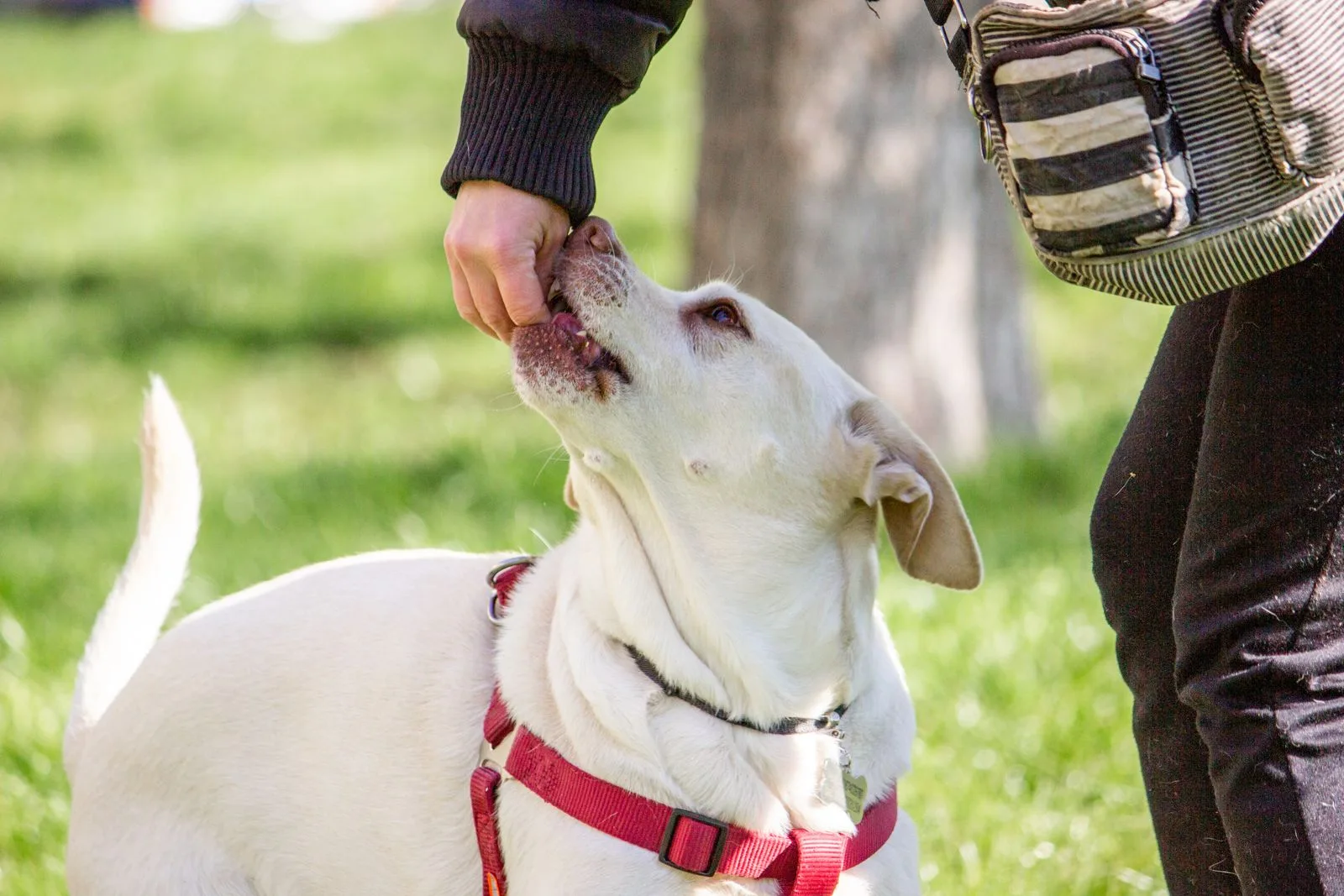
Training on walks happens fast. Your dog checks in, ignores a squirrel or walks nicely past another dog, and you have about a second to mark it and deliver a reward. If the treats are buried in a zipped coat pocket or a sandwich bag, that moment is gone.
A treat pouch keeps rewards at your hip, ready for one hand while the other holds the leash. The best dog treat pouch for training walks opens quickly, stays shut when you move, carries the other things you need on a walk, and is easy to clean. This guide covers what to check, two well-known pouches with their published features, and how to use a pouch so treats help rather than hinder your training.
What to look for in a training treat pouch
A closure you can work with one hand
This is the most important feature. Common designs:
- Magnetic closures snap shut on their own and pull open easily.
- Hinge or spring closures stay open while you train and snap shut with a squeeze or tap.
- Drawstrings are cheap and simple but slower to open and close.
- Zippers keep everything in but are too slow for marking good behavior.
If you jog with your dog, check that the closure stays shut when you move.
Carry style
- Belt: sits on your hip and frees up your waistband.
- Clip: clips onto a waistband or pocket, good for short sessions.
- Both: many pouches include a clip and a detachable belt.
Try the pouch on the side opposite your leash hand so you can reach in without tangling the leash.
Capacity and shape
A pouch does not need to be huge. For a training walk you need enough small treats for many quick rewards. A wide, stiff opening is easier to reach into than a narrow, floppy one.
Pockets for everything else
Useful extras include a pocket for poop bags, a zip pocket for keys or a phone, a clicker loop and a dispenser for bags. These let the pouch replace a walking bag on short outings. Our guide to poop bag holders for a leash covers the other side of that kit.
Easy cleaning
Treats leave crumbs and oil. A waterproof or wipeable lining, or a pouch that can go in the washing machine, saves a lot of scrubbing.
Two treat pouches to know
Suits jogging and a quick magnetic closure: Ruffwear Treat Trader
Ruffwear's Treat Trader uses a magnetic closure that the brand says makes an audible cue when it opens. Ruffwear lists a waterproof lining, a zippered outer pocket for a key fob and pick-up bags, a clicker loop and a moldable rim that holds the opening wide. It can be worn on an adjustable belt (30 to 48 inches) or with an integrated belt clip, and holds up to 2 cups of treats.
If your dog learns that the click of the magnet means a treat is coming, that sound can become part of your training, so be consistent about when you open it.
Browse Ruffwear Treat Trader treat pouches and check the color and current belt option before ordering.
Suits a pouch that stays open during a session: PetSafe Treat Pouch Sport
PetSafe's Treat Pouch Sport uses a hinge closure that the brand says stays open while you train and closes with a touch. PetSafe lists a divided inner pocket for two kinds of treats, a front pocket, a carabiner for a clicker, a belt clip and a detachable adjustable belt, and says it is machine washable on cold. It comes in several colors.
The divided pocket is handy if you use a high-value treat for hard moments, such as passing another dog, and a lower-value treat for everyday check-ins.
Browse PetSafe Treat Pouch Sport and match the listing to the model name.
Suits marking behavior precisely: a training clicker
A pouch with a clicker loop or carabiner keeps a clicker in reach. A clicker gives a consistent sound to mark the exact moment your dog does something right, followed by a treat.
Browse dog training clickers with wrist straps.
Treats: size and amount
A treat pouch makes it easy to hand out many rewards, which is good for training but adds up. VCA Animal Hospitals' guidance on dog treats says treats should make up no more than 10% of your dog's daily calories, and recommends checking with your veterinary team on the right amount for your dog.
Ways to keep rewards frequent without overfeeding:
- Use tiny pieces. A pea-sized piece is enough for a quick reward for many dogs.
- Use part of your dog's daily food for easy, low-distraction moments.
- Save high-value treats for difficult situations.
- Reduce meals slightly on heavy training days, following your vet's advice.
- Check ingredients if your dog has allergies or a sensitive stomach.
How to use a treat pouch on walks
- Load it before you leave. Put the pouch on before clipping the leash.
- Wear it on the opposite side to your leash hand. That keeps the leash out of the way when you reach in.
- Mark, then reach. Say your marker word or click first, then go to the pouch. Reaching first can become the cue your dog watches for.
- Reward at your side. Delivering treats where you want your dog to walk reinforces that position.
- Close it between rewards if your dog tends to nose at it.
- Empty and wipe it after each walk. Leftover treats can go stale and attract pests.
Pairing a pouch with the rest of your walking kit
A treat pouch works best alongside gear that suits your dog:
- Harness: a well-fitted harness can make loose-leash training more comfortable. See front clip vs back clip dog harness and how to choose a dog harness.
- Leash: a standard fixed-length leash is usually easier for training than a retractable one. Our dog leash types explained guide covers the options.
- Water: on longer walks, carry water too; see our guide to portable dog water bottles for hiking.
Cleaning and care
- Turn it inside out if the design allows and shake out crumbs.
- Wipe waterproof linings with warm, soapy water and let them dry fully.
- Machine wash only if the brand says so, following its temperature and drying guidance.
- Keep treat types separate if a family member or dog has a food allergy.
Common treat pouch problems and fixes
The pouch flops open when you walk. Tighten the belt so the pouch sits snugly on your hip, or choose a magnetic or hinge closure that shuts on its own.
Your dog stares at the pouch instead of you. Keep your hand away from the pouch until after you mark the behavior, and sometimes reward from your other hand or pocket so the pouch is not the only source.
Treats crumble into dust. Soft, moist treats break less than dry biscuits. Cut them to size before the walk rather than breaking them in the pouch.
It bumps against your leg when you jog. Move it slightly toward your back, or use the clip on a firm waistband instead of the belt.
You keep forgetting it. Store the pouch with the leash, so picking up one reminds you of the other.
Quick checklist
- Can you open and close it with one hand?
- Does it stay closed when you move quickly?
- Belt, clip or both?
- Pockets for bags, keys and a clicker?
- Wipeable or washable lining?
- Fits the treats you use without crushing them?
Frequently asked questions
Do I need a treat pouch to train my dog?
No, but it helps. A pouch keeps treats ready so you can reward at the right moment, which is hard with treats in a coat pocket.
Magnetic or hinge closure?
Both open quickly. Magnetic closures snap shut on their own; hinge closures can stay open during a session and close with a touch. Choose based on whether you want it to shut automatically.
How many treats should I bring on a walk?
Bring enough small pieces for frequent rewards, and keep total treats within about 10% of your dog's daily calories, as VCA advises. Ask your vet about your dog's needs.
Can I wash a treat pouch?
Some are machine washable, such as the PetSafe Treat Pouch Sport on cold. Others have a wipeable lining. Follow each brand's care instructions.
Where should I wear a treat pouch?
On the hip opposite your leash hand, so you can reach in without tangling the leash.
About the author: This article was researched and written by the Dog Gear Hub Editorial Team. We compare dog gear and gifts using manufacturer and retailer information and owner reviews, and we say clearly when we haven't tried a product ourselves.
Read next: Front-Clip vs Back-Clip Dog Harness: Which One Do You Need? →